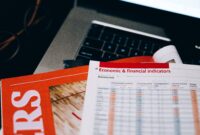
The Economic Recession 2026 discussion is becoming more important for households, investors, and business owners. Economic growth remains positive globally, but risks have increased. Energy shocks, inflation pressure, high public debt, trade uncertainty, and financial market volatility can quickly change the outlook.
The International Monetary Fund projects global growth of about 3% in 2026. However, it also warns that downside risks remain significant. The IMF highlights geopolitical tensions, energy disruptions, financial market repricing, and uncertainty around technology investment as important risks. Read the IMF World Economic Outlook.
A recession is not guaranteed. In fact, economic data can remain strong even while certain sectors weaken. The key is preparation. Understanding recession warning signs can help you protect cash flow, reduce unnecessary debt, manage investment risk, and find new opportunities.
What Is an Economic Recession?
An economic recession is a significant decline in economic activity. It usually affects employment, consumer spending, business investment, production, and income.
Recessions can vary in length and severity. Some are relatively short. Others can create years of financial stress. A recession does not necessarily mean that every asset will fall or that every business will fail. Some industries can continue growing even when the wider economy slows.
For investors, the important lesson is simple. Economic weakness can affect different assets in different ways. Therefore, diversification and risk management matter more than trying to predict the exact month a recession will begin.
Economic Recession 2026: Key Warning Signs to Watch
1. Rising Unemployment
Employment is one of the most important economic indicators. When companies reduce hiring or begin large-scale layoffs, household income can weaken.
Higher unemployment can also reduce consumer spending. This creates a negative cycle. Lower spending can reduce business revenue. Lower revenue can lead to additional cost-cutting.
Investors should therefore monitor unemployment claims, payroll growth, labor participation, and wage growth instead of focusing on a single employment report.
2. Slower Consumer Spending
Consumers drive a large portion of economic activity. When households become worried about jobs, inflation, or debt, they often postpone major purchases.
Slower spending can hurt retailers, restaurants, travel companies, manufacturers, and other consumer-focused businesses.
The Federal Reserve’s 2026 Monetary Policy Report noted that U.S. consumer spending growth had slowed compared with earlier periods. See the Federal Reserve’s economic analysis.
3. Weak Business Investment
Businesses tend to invest when they expect strong future demand. They may delay new factories, equipment purchases, hiring, and expansion when confidence falls.
A sustained decline in business investment can be an important recession warning sign. It can also affect technology companies, construction firms, commercial real estate, and industrial suppliers.
4. Tight Credit Conditions
Credit is essential for households and businesses. Higher borrowing costs can make mortgages, business loans, credit cards, and corporate financing more expensive.
When banks become more cautious, companies may find it harder to obtain funding. Consumers may also reduce borrowing.
Credit spreads and financial conditions are widely monitored because they can provide information about future economic stress. The Federal Reserve has discussed yield curves and credit spreads as useful recession-risk indicators. Learn about recession indicators.
5. Weakening Manufacturing and Housing Activity
Manufacturing and housing are highly sensitive to interest rates and economic expectations. Falling factory orders, weaker construction activity, lower home sales, and declining business investment can signal a slowdown.
However, one weak month is not enough to confirm a recession. Investors should look for persistent deterioration across several indicators.
Investment Risks During Economic Recession 2026
Markets often become volatile before an official recession is confirmed. Investors can experience sharp price movements as markets react to economic data, interest-rate expectations, corporate earnings, and geopolitical developments.
Stock Market Risk
Stocks can decline when investors expect lower corporate profits. Highly valued growth companies may be particularly sensitive to changes in interest rates and expectations.
That does not mean investors should automatically sell stocks. Panic selling can turn temporary volatility into permanent losses.
A better approach is to review your asset allocation. Make sure your portfolio matches your risk tolerance, investment horizon, and financial goals.
Bond Market Risk
Bonds are often considered defensive investments, but they are not risk-free. Bond prices can fall when interest rates rise. Corporate bonds can also face additional credit risk if businesses experience financial difficulties.
High-quality bonds may provide diversification, while lower-quality debt can become more vulnerable during a recession.
Real Estate Risk
Real estate can be affected by mortgage rates, employment, credit availability, and consumer confidence. Commercial real estate can face additional pressure when businesses reduce office space or investment.
Investors should consider cash flow, debt levels, vacancy risk, and local economic conditions before purchasing property during uncertain periods.
How to Protect Your Money in 2026
Build an Emergency Fund
An emergency fund is one of the simplest recession defenses. It can help cover essential expenses if income falls unexpectedly.
Many households aim to keep several months of essential expenses in accessible savings. The appropriate amount depends on income stability, debt obligations, household size, and employment conditions.
Keep emergency savings in an account that is safe and easily accessible. Do not invest emergency money in assets that can experience large short-term price declines.
Reduce High-Interest Debt
High-interest debt can become especially difficult during an economic slowdown. Credit card balances and expensive personal loans can consume cash flow that could otherwise support savings.
Start by listing all debts. Then identify the accounts with the highest interest rates. Paying down expensive debt can provide a guaranteed financial benefit equal to the interest you avoid.
Control Recurring Expenses
Review subscriptions, insurance costs, utilities, transportation expenses, and other recurring bills.
Small monthly savings can become meaningful over a full year. More importantly, lower fixed expenses make it easier to manage a temporary income reduction.
Consider creating a recession-ready budget. Separate expenses into three categories: essential, important, and optional. This makes it easier to cut spending quickly if circumstances change.
Ways to Increase Income During an Economic Slowdown
Reducing expenses is useful, but increasing income can provide another layer of protection.
Build Multiple Income Streams
A second income stream can reduce dependence on one employer or business. Depending on your skills, options may include freelancing, consulting, digital products, content creation, or an online business.
Some people also explore affiliate marketing because it can be started with relatively low upfront costs. However, it requires useful content, audience trust, and consistent marketing. There is no guarantee of income.
Another popular comparison is affiliate vs dropshipping. Affiliate marketing generally avoids inventory management because products are sold by another company. A dropshipping business can offer more control over the customer experience but may involve customer service, advertising, supplier, and refund challenges.
For long-term financial resilience, focus on sustainable skills and businesses rather than promises of fast money. A carefully built passive income stream can complement employment income, but most passive-income ideas require significant work before they become relatively passive.
Smart Investment Strategies for a Recession
Keep a Long-Term Perspective
Recessions are part of economic cycles. Markets have historically experienced periods of declines followed by recoveries.
Investors with long time horizons may benefit from maintaining a disciplined investment plan rather than attempting to predict every market movement.
Diversify Your Portfolio
Diversification spreads risk across different assets, industries, and geographic markets.
A diversified portfolio may include a combination of stocks, high-quality bonds, cash, and other assets depending on the investor’s goals and risk tolerance.
Review your portfolio regularly. Avoid allowing one company, sector, or asset class to dominate your financial future.
Maintain Cash Reserves
Cash can provide flexibility during market downturns. It can cover emergencies and may allow investors to take advantage of opportunities without selling long-term investments at unfavorable prices.
However, holding too much cash for too long can reduce purchasing power when inflation remains elevated. The goal is balance.
Why Inflation Still Matters During a Recession
One of the biggest challenges in 2026 is that slower growth does not automatically mean lower inflation.
The IMF’s July 2026 update projected global growth at 3% for 2026 and 3.4% for 2027, while noting that global disinflation had stalled. Energy prices and geopolitical developments remain important risks. Review the IMF July 2026 update.
This creates a difficult environment. Consumers can face higher living costs while businesses deal with weaker demand.
For households, this makes budgeting especially important. Focus on essential spending, maintain adequate savings, and avoid taking on unnecessary variable-rate debt.
What Businesses Should Do Before a Recession
Businesses can prepare by strengthening cash flow and reducing unnecessary financial risk.
Review operating expenses. Renegotiate supplier contracts where possible. Improve inventory management. Protect profitable customers. Avoid excessive expansion funded by expensive debt.
Businesses should also examine their revenue concentration. Depending heavily on one customer, supplier, product, or geographic market can increase vulnerability during an economic downturn.
Digital businesses can also focus on customer retention and recurring revenue. Building an online business with useful products or services can create additional flexibility, but it should be managed with realistic revenue expectations.
Should You Be Worried About an Economic Recession in 2026?
The answer depends on the country, industry, and household. Current forecasts do not automatically point to a global recession. The IMF’s latest outlook still expects global economic growth in 2026.
At the same time, risks are elevated. The OECD has warned that a prolonged energy disruption could significantly weaken global growth and push several economies toward recession. Read the OECD Economic Outlook.
This is why preparation is more useful than prediction. Nobody can reliably forecast every economic shock. However, you can control your savings rate, debt level, spending habits, investment diversification, and income skills.
Final Thoughts on Economic Recession 2026
The Economic Recession 2026 outlook contains both risks and opportunities. Slower growth, inflation uncertainty, energy shocks, tighter credit, and market volatility can create financial pressure. Yet prepared households and businesses are usually better positioned to handle uncertainty.
Start with the basics. Build an emergency fund. Reduce expensive debt. Control recurring expenses. Diversify investments. Protect your income. Develop valuable skills and consider carefully selected additional income streams.
Most importantly, avoid making major financial decisions based on headlines alone. Economic conditions can change quickly. Use reliable data from institutions such as the International Monetary Fund, Federal Reserve, and OECD.
A recession may be difficult to predict, but financial resilience can be built in advance. The strongest strategy is not trying to perfectly time the economy. It is creating a financial plan that can survive different economic conditions.